Antigravity A1 & DJI Mini 5 Pro share many similarities, but there are also important differences, such as quality, performance, features, design, and connectivity. If you want the best one between them, I Would recommend the Antigravity A1 rather than the DJI Mini 5 Pro.
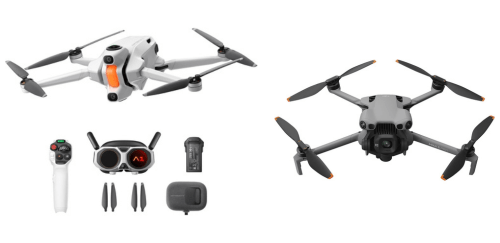
Why Do I Recommend The Antigravity A1?
- The Antigravity A1 features a dual-lens 360° camera system to capture every angle in a single flight and enable flexible reframing during editing, while the DJI Mini 5 Pro uses a single forward-facing camera.
- Antigravity A1 comes with 8K 360° video recording at 30fps for extracting multiple high-resolution perspectives from one recording session, whereas the DJI Mini 5 Pro records 4K video at up to 120fps.
- It has a 360° field of view to capture a wide range of angles, while the DJI Mini 5 Pro has an approximately 82–93° field of view.
- The Antigravity A1 includes electronic stabilization through full-sphere capture for maintaining usable footage even without a mechanical gimbal, whereas the DJI Mini 5 Pro uses a 3-axis mechanical gimbal.
- Antigravity A1 supports immersive FPV goggles and motion-based controls for providing a first-person flying experience with intuitive directional movement, while the DJI Mini 5 Pro uses a standard dual-stick remote controller.
- It features AI-based reframing tools to select subjects and angles after recording without precise framing during flight, while the DJI Mini 5 Pro requires real-time framing.
- The Antigravity A1 comes with a 55MP photo capture capability for extracting detailed still images from spherical footage and enabling multiple compositions from one shot, while the DJI Mini 5 Pro captures up to 50MP photos.
- Antigravity A1 supports full-environment capture for recording surroundings in all directions simultaneously, whereas the DJI Mini 5 Pro captures only what the camera is pointed at during flight.
Maybe the DJI Mini 5 Pro can make you comfortable because it’s a little bit cheaper than the Antigravity A1. But you have to compromise all the above-mentioned features. Now the Decision is Yours. I hope it was helpful to choose the right one.
Side-by-Side Comparison
| Feature | Antigravity A1 | DJI Mini 5 Pro |
| Camera System | Dual-lens 360° | Single-lens |
| Video Resolution | 8K 360° @ 30fps | 4K @ 120fps / 1080p @ 240fps |
| Sensor Size | 1.28-inch CMOS | 1-inch CMOS |
| Photo Resolution | 55MP | 50MP |
| Stabilization | Electronic | 3-axis mechanical gimbal |
| Transmission Type | Wi-Fi | OcuSync 4.0 |
| Obstacle Sensing | Forward + backward | Omnidirectional + LiDAR |
| Control Type | FPV goggles + motion controller | RC controller |
| Battery Type | Standard + high-capacity optional | Intelligent Flight Battery / Plus |
| Field of View | 360° spherical | ~82–93° |
| Shooting Modes | 360 reframing | HDR, D-Log M, vertical shooting |
| Tracking System | AI tracking | ActiveTrack 360 |
| Price | Check Antigravity A1 Price | Check DJI Mini 5 Pro Price |
What Common Both Can Do?
- GPS Positioning: Both drones use GPS-based positioning systems to maintain stable hovering and accurate flight paths. This allows precise navigation and helps maintain position even in light wind conditions.
- Return-to-Home: Both models include a return-to-home function that automatically brings the drone back to its takeoff point. This feature helps prevent loss of the drone during signal drops or low battery situations.
- Follow/Tracking Mode: Each drone supports subject tracking functionality for keeping a moving subject in frame. This enables hands-free filming for activities such as walking, cycling, or outdoor sports.
- Brushless Motors: Both drones use brushless motors for propulsion, providing efficient power delivery and longer motor lifespan. This contributes to smoother operation and reduced maintenance over time.
- Foldable Design: Both drones feature foldable arms, allowing them to be compact for transport and storage. This makes them easier to carry for travel and outdoor use.
- Rechargeable Battery: Each drone operates using a rechargeable lithium-based battery system. This enables multiple flight sessions with recharging instead of requiring battery replacement.
- App Control Support: Both drones can be controlled and configured through a mobile application. This allows users to access settings, camera controls, and flight data in real time.
- Live Video Transmission: Both models provide real-time video transmission from the drone to the controller or mobile device. This enables precise framing and monitoring during flight.
- Camera Stabilization: Each drone includes stabilization technology to reduce camera shake during movement. This ensures smoother video output even when the drone is in motion.
- Photo Capture: Both drones support still image capture for aerial photography. This allows users to take high-resolution photos from elevated perspectives.
- Video Recording: Each model is capable of recording video footage during flight. This enables capturing dynamic aerial scenes for personal or professional use.
- Intelligent Flight Modes: Both drones include automated flight modes that assist with capturing cinematic shots. These modes simplify complex maneuvers for users of different experience levels.
- Auto Takeoff/Landing: Both drones support automatic takeoff and landing functions through controller or app commands. This reduces the difficulty of manual operation, especially for beginners.
- Obstacle Detection: Each drone includes obstacle detection systems to identify nearby objects during flight. This helps reduce the risk of collisions in complex environments.
- Firmware Updates: Both drones support firmware updates to improve performance and add features over time. This ensures the devices remain functional and up to date with software enhancements.
- Remote Control Support: Each drone can be operated using a dedicated remote controller. This provides more precise control compared to touchscreen-only operation.
- Battery Status Monitoring: Both drones display battery level information in real time. This helps users manage flight duration and plan safe landings.
- SD Card Recording: Each drone supports recording media to a memory card. This allows storage of high-quality photos and videos directly from the device.
Common Features
| Feature | Antigravity A1 | DJI Mini 5 Pro |
| GPS Positioning | Yes | Yes |
| Return-to-Home | Yes | Yes |
| Follow/Tracking Mode | Yes | Yes |
| Brushless Motors | Yes | Yes |
| Foldable Design | Yes | Yes |
| Rechargeable Battery | Yes | Yes |
| App Control Support | Yes | Yes |
| Live Video Transmission | Yes | Yes |
| Camera Stabilization | Yes | Yes |
| Photo Capture | Yes | Yes |
| Video Recording | Yes | Yes |
| Intelligent Flight Modes | Yes | Yes |
| Auto Takeoff/Landing | Yes | Yes |
| Obstacle Detection | Yes | Yes |
| Firmware Updates | Yes | Yes |
| Remote Control Support | Yes | Yes |
| Battery Status Monitoring | Yes | Yes |
| SD Card Recording | Yes | Yes |
| Price | Check Antigravity A1 Price | Check DJI Mini 5 Pro Price |
FAQ
Which drone has better video capabilities? Which drone has a longer flight time? Which drone is easier for beginners to use? Does both drones support obstacle avoidance? Which drone is better for professional photography? Do both drones support GPS and return-to-home? Which drone has better transmission range and signal stability? Can both drones capture high-resolution photos? Which drone is more portable? Do both drones support live video feed during flight? Which drone is better for creative content like social media? Do both drones support mobile app control? Which drone performs better in windy conditions? Do both drones receive firmware updates? |